Here’s a stat that says more about Caitlin Clark’s finances than any highlight reel could: her WNBA salary this year is $528,846. Her endorsement income in a single year was $16.1 million. That gap — salary versus brand value — is basically the whole story of how she got rich, and it’s why so many people are curious about the real number behind the name.
Caitlin Clark net worth is most commonly estimated at $20 million in 2026, according to Celebrity Net Worth, though you’ll see figures ranging from $8 million to $20 million depending on the source and how conservatively they value her ongoing deals. Let’s break down where that money actually comes from — because almost none of it is coming from the box score.
Caitlin Clark Net Worth: The Quick Answer
Worth saying upfront: nobody outside Clark’s own financial team knows her exact number. Every figure here — including the $20 million headline estimate — is a researched approximation built from her known contracts and reported endorsement income, not a confirmed bank balance. The fact that credible outlets land anywhere from $8 million to $20 million tells you how much interpretation goes into valuing an athlete’s ongoing brand deals.
| Category | Detail |
|---|---|
| Most-cited net worth (2026) | $20 million (Celebrity Net Worth) |
| Lower public estimates | $8 million – $10 million |
| 2026 WNBA base salary | $528,846 |
| 2025 estimated endorsement income | ~$16.1 million |
| Nike deal | 8 years, $28 million (signed April 2024) |
| College NIL earnings | ~$3.1 million (University of Iowa) |
From Des Moines Driveways to National Headlines
Caitlin Elizabeth Clark was born on January 22, 2002, in Des Moines, Iowa, into a family where sports were just the default language. Her father, Brent Clark, played college baseball and basketball, and Caitlin grew up going head-to-head with her two brothers in the driveway — reportedly beating older boys at basketball before she was even a teenager. That’s not a cute origin story added for flavor; it’s a big part of why her game developed the fearless, deep-range shooting style that later became her signature.
At Dowling Catholic High School, she was named Iowa’s Gatorade Player of the Year and earned McDonald’s All-American honors. When it came time to pick a college, she turned down national powerhouses like Notre Dame and stayed home, committing to the University of Iowa — a decision that, in hindsight, turned her into a genuine hometown hero before she ever played a professional game.
Setting Records No One Else Has Touched
By the time she left Iowa, Clark had become the NCAA’s all-time leading scorer — across both men’s and women’s Division I basketball, not just the women’s record book. That’s not a small qualifier. It means, statistically, she scored more points in college than any player in the history of the sport, regardless of gender.
That kind of record doesn’t just fill a stat sheet — it fills arenas and TV screens. Her college games routinely drew ratings that rivaled or beat men’s college basketball broadcasts, and by her senior year she was pulling in an estimated $3.1 million in NIL income, an almost unheard-of figure for a women’s college basketball player at the time.
The Rookie Contract That Didn’t Match the Hype
When the Indiana Fever drafted Clark first overall in the 2024 WNBA Draft, her rookie contract was worth $338,056 total across four seasons — with her actual first-year salary landing at just $76,535. For an athlete who was already generating national television ratings and selling out arenas, that number looked almost comically small next to her actual commercial value.
It wasn’t a mistake or an oversight — it’s just how WNBA rookie scale contracts worked at the time, tying pay to draft position and league-wide salary caps rather than individual star power. But the gap between what she was earning and what she was generating for the league became one of the most talked-about storylines in sports business coverage throughout 2024 and 2025.
The 2026 CBA: A Real Raise, Finally
That gap started closing in March 2026, when the WNBA and the players’ union agreed to a new seven-year collective bargaining agreement running through 2032. It brought major salary increases across the league, and Clark’s own base salary jumped to $528,846 for the 2026 season — roughly seven times her rookie-year pay.
Context helps here too: NBA superstar Stephen Curry makes $59.6 million a year. Clark’s new, significantly higher WNBA salary is still a small fraction of that. It’s a useful reminder that even after a landmark raise, on-court pay isn’t where her real financial story lives — it’s still overwhelmingly about what happens off the court.
The Nike Deal and the “Caitlin 1”
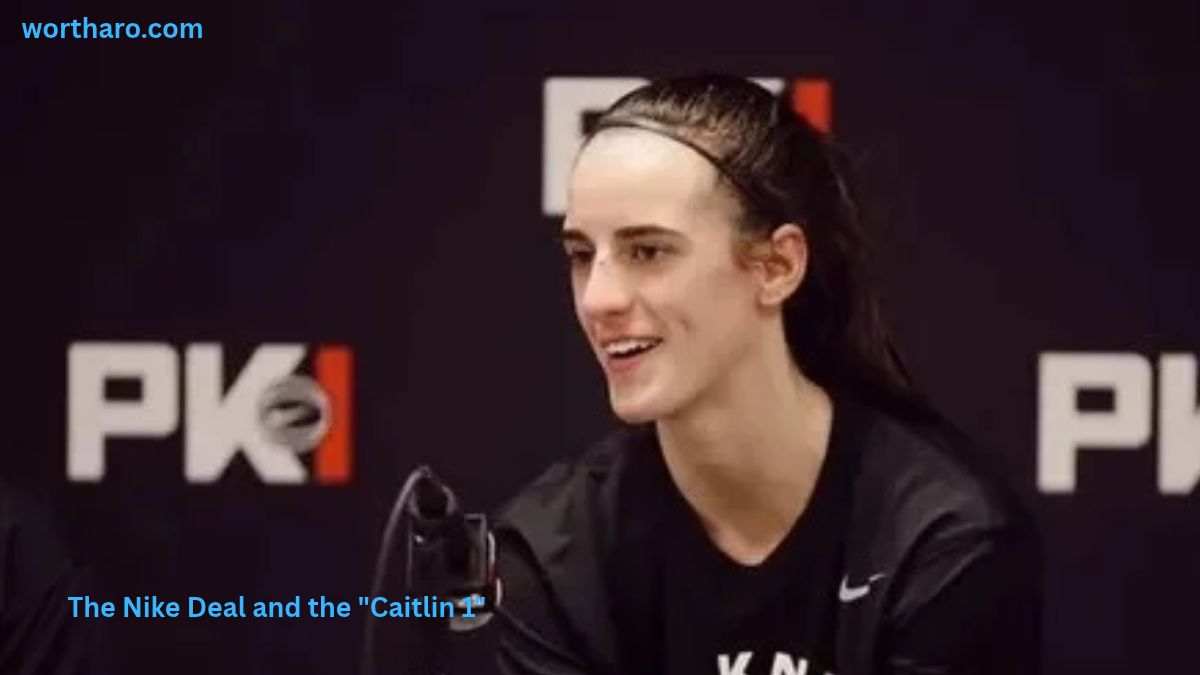
Speaking of off the court — this is where the real money shows up. In April 2024, Clark signed an eight-year, $28 million deal with Nike, worth roughly $3.5 million a year. The deal includes her own signature shoe line, a rare achievement in women’s basketball that puts her in the same conversation as the athletes who get shoes named after them rather than just wearing someone else’s.
That shoe, the Caitlin 1, is set to launch worldwide on October 1, 2026. Signature shoe deals like this can become a genuine long-term wealth engine — LeBron James and Stephen Curry’s signature lines have generated royalty income for years after signing, and if the Caitlin 1 connects with consumers the way those have, it could end up being one of the more financially significant milestones of her career, long after any single WNBA season fades from memory.
Beyond Nike: The Rest of the Endorsement Portfolio
Nike is the headline deal, but it’s not the only one. Clark has also partnered with Wilson Sporting Goods and Gatorade, and picked up deals with companies like Bose during her college years — the kind of broad-based endorsement portfolio companies build around an athlete they expect to stay relevant for a decade or more, not just a single hot season.
Altogether, her endorsement income for 2025 alone is estimated at around $16.1 million — more than 30 times what she earned that year in WNBA salary. That single statistic is really the whole story of Caitlin Clark’s finances in one number: she’s a basketball player whose paycheck comes almost entirely from being a brand, not from her box score.
Her Bigger Impact: The League-Wide TV Deal
Here’s a number worth understanding even though it’s not personal income: the media rights deal Clark’s presence helped drive for the entire WNBA is worth $2.2 billion over 11 years. She didn’t sign that contract personally and doesn’t collect it directly — it’s a league-wide deal — but her arrival is widely credited as a major factor in why the league’s television value exploded the way it did.
That context matters for understanding her actual market value. Analysts have pointed out that her personal compensation represents a tiny fraction of the overall commercial value she’s helped create for the league — which is part of why so much attention has gone toward pushing WNBA pay structures higher industry-wide, not just for her individually.
Injuries: The Wildcard in Her Financial Story
It’s worth being honest about the one real risk factor in Clark’s financial trajectory: her health. She’s dealt with significant injuries in two of her first three professional seasons, including a back injury in June 2026 that was managed through a scheduled bye week. The league separately handed down a retroactive suspension to Alyssa Thomas following an on-court incident involving Clark — a sign that officials are taking her physical safety more seriously after the fact than referees did in the moment.
None of this changes her current earning power, since most of her income comes from long-term endorsement contracts rather than game checks. But it’s a real factor worth watching: her commercial value is closely tied to being visibly, consistently on the court, and repeated injuries are the kind of thing that can slow momentum on future deals if they keep piling up.
It’s also worth noting how differently injury risk plays out for someone like Clark compared to a typical WNBA player. Because so much of her income is locked into multi-year contracts like the Nike deal rather than performance bonuses, a missed game or even a missed stretch of the season doesn’t immediately hit her bank account the way it might for an athlete more dependent on appearance fees or per-game incentives. The bigger risk is longer-term: sponsors renewing or expanding deals years down the line tend to factor in durability, and a pattern of recurring injuries could shape how aggressively companies bid for her next contract cycle.
What Happens Next: Free Agency and Beyond
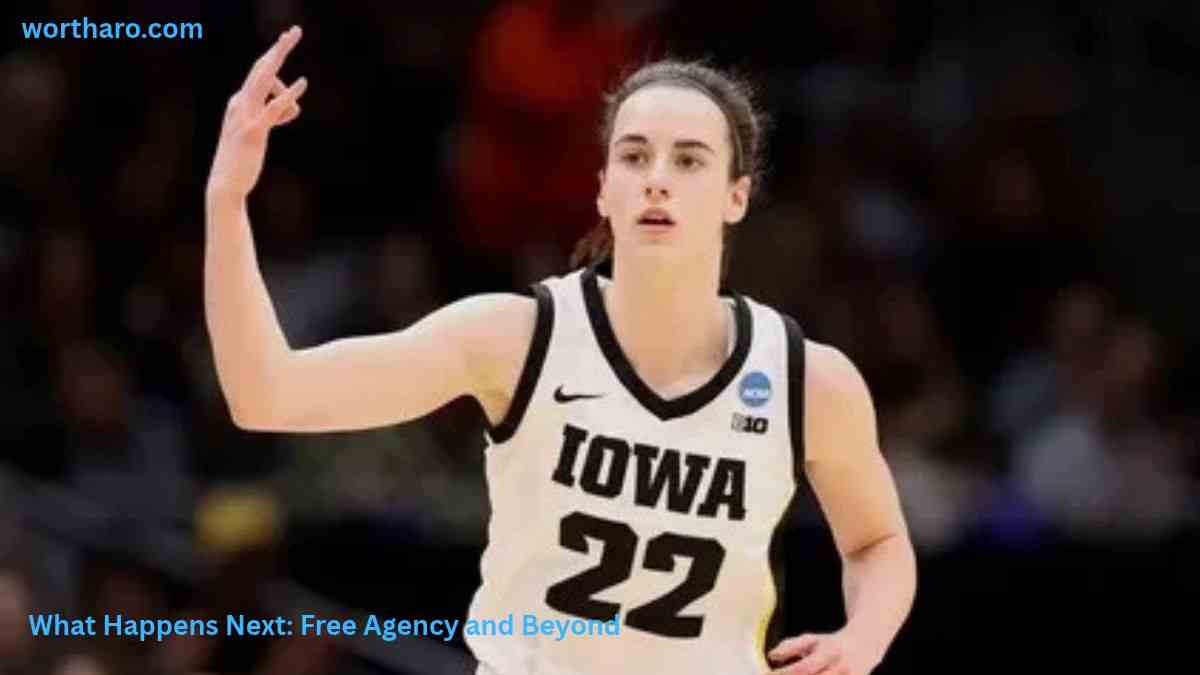
Clark is set to become a restricted free agent after the 2027 season. Given how dramatically the WNBA’s pay structure has already shifted with the 2026 CBA — and given her outsized role in driving the league’s new $2.2 billion media deal — her next contract negotiation could bring a significant jump, especially if her performance and commercial value keep climbing at anything close to their current pace.
There’s also a broader comparison worth making here. Fellow WNBA stars like Sabrina Ionescu and Angel Reese have also built strong endorsement portfolios, but Clark’s brand value is generally regarded as the outlier even within that group — a reflection of the record-breaking college career and the ratings surge that followed her into the pros. Brittney Griner, by contrast, has a reported net worth closer to $5 million, built more heavily around salary and a longer WNBA tenure rather than a comparable endorsement boom. Those gaps illustrate just how unusual Clark’s earning curve has been: most athletes build wealth gradually over a decade-plus career, while she compressed a huge share of that growth into roughly two years.
Career Earnings Snapshot
| Year | Milestone | Financial Detail |
|---|---|---|
| 2023 (college) | Senior season at Iowa, becomes NCAA’s all-time leading scorer | Estimated $3.1M in career NIL earnings |
| 2024 | Drafted No. 1 overall by Indiana Fever; signs 8-year, $28M Nike deal | Rookie salary: $76,535 |
| 2025 | Endorsement income surges as brand deals expand | ~$16.1M in estimated endorsement earnings |
| 2026 | New 7-year WNBA CBA takes effect; “Caitlin 1” Nike shoe set to launch October 1 | Base salary jumps to $528,846 |
Also read: Shaboozey Net Worth
Conclusion
Caitlin Clark’s net worth — most credibly around $20 million, though estimates range as low as $8 million — tells a story that’s become increasingly common for the biggest stars in women’s sports: the real money isn’t in the paycheck from the league, it’s in what the athlete represents to sponsors, broadcasters, and fans. Her WNBA salary jumped sevenfold under the 2026 CBA, but even that historic raise is still dwarfed by a single year of Nike and endorsement income.
The more interesting number, honestly, isn’t her net worth at all — it’s the $2.2 billion media deal her popularity helped create for the entire league. Whether her personal fortune lands closer to $10 million or $20 million a few years from now will depend heavily on two things: how well the Caitlin 1 sells starting this October, and whether she can stay healthy enough to keep proving, night after night, why sponsors are willing to pay her so much more than the league itself currently does.
Frequently Asked Questions
What is Caitlin Clark’s net worth?
Caitlin Clark’s net worth is most commonly estimated at $20 million as of 2026, according to Celebrity Net Worth, though other sources place it anywhere between $8 million and $20 million.
How much does Caitlin Clark make from the WNBA?
Her 2026 base salary is $528,846 under the WNBA’s new collective bargaining agreement, up significantly from her 2024 rookie-season salary of $76,535.
How much is Caitlin Clark’s Nike deal worth?
She signed an eight-year, $28 million deal with Nike in April 2024, which includes her own signature shoe, the Caitlin 1, launching October 1, 2026.
Does Caitlin Clark make more from endorsements than her salary?
Yes, by a wide margin. Her estimated 2025 endorsement income was around $16.1 million — more than 30 times her WNBA salary that year.
How old is Caitlin Clark?
Caitlin Clark was born on January 22, 2002, making her 24 years old in 2026.
What college did Caitlin Clark play for?
She played for the University of Iowa, where she became the NCAA’s all-time leading scorer across both men’s and women’s Division I basketball.